
When Addiction Touches You or Someone You Love: A Stigma-Free Guide for Aviation
Updated: Dec 5, 2025
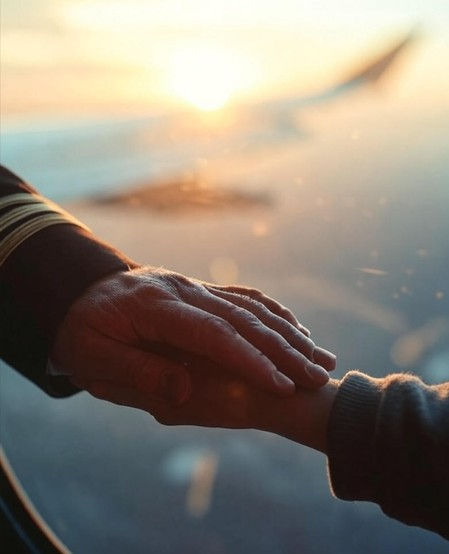
“Don’t ask ‘Why the addiction?’ Ask ‘Why the pain?", Dr. Gabor Maté
I’d like to begin humbly by setting the tone and explaining that I write on this topic as an independent researcher only. Addiction is a subject that deserves the utmost sensitivity, respect, and expert care grounded in evidence based treatment and right understanding. At the end, I will include a list of accessible resources for those seeking support.
Addiction is one of those forces in life that ripples far beyond the individual. Even if you have been fortunate enough never to face it personally, you almost certainly know someone who has, often in ways that are profound, painful, and quietly destructive. It’s an insidious problem, one that many people endure in silence. Shame, embarrassment, fear of judgment, and even denial often keep families and individuals from speaking openly about what’s happening. Some pretend it isn’t real. Others rationalise it as just a phase, or hope it simply burns out. And then there are the cases where it spirals into a full-blown crisis, engulfing entire circles of family and friends.
It rarely just pops up all at once. It tends to move in phases, often beginning long before anyone even realises what’s happening. In the early stages, the people closest to the addicted individual are usually the first to notice and feel the heat. They sense the subtle changes, absorb the emotional turbulence, and often carry the burden long before the person struggling with addiction recognises the gravity of their own situation. Eventually, the person moves from being highly skilled at masking and hiding their behaviour to the point where the addiction takes over almost completely. Think of the alcoholic figuring out countless ways to conceal drinks-hidden in cisterns, disguised in teacups, or, if you’ve seen The Irishman, even carved into a watermelon. Their innovative solutions are truly remarkable. The addiction becomes the centre of gravity, the dark friend that solves the immediate problem for the addict and therefore becomes the priority, even above family and friends.
As this dynamic deepens, only facilitators, or those who enable or at least don’t obstruct, are allowed close. Everyone else becomes the enemy or become viewed as the enemy of the addictive aims. The addiction isolates the person from those who care most. This pattern repeats over and over, no matter the addiction. Some addictions are more visibly destructive; others are quiet, private shadows that encroach insidiously. But all of them have profound negative impacts on the lives of everyone involved.
In a safety-critical industry like aviation, this is particularly difficult to manage. Picture being on a layover in South America and getting a call from home in the UK or Spain or anywhere else, telling you that your child has been hospitalised again due to an overdose; or that a sibling or parent is in the middle of a crisis; or that your partner is begging for help because things are falling apart. You may not want to share this with your employer- out of shame, fear, or simply in the hope that divine providence will sort it out and life can return to normal. These situations create cycles of crisis, temporary recovery, relapse, and then the pattern repeats, like a nightmare merry-go-round that no one can seem to step off.
And let’s be very clear, addiction isn’t a class problem or a lack of education problem either. It affects everyone, no exception, rich, poor, working-class, upper-class, highly educated, famous, unknown even royalty. It creeps into homes like a shadow that appears as the light recedes, and one day you wake up to find the weather has turned stormy and overcast. For those who stand by the person suffering; be it partners, parents, siblings, close friends -watching someone you love destroy themselves from the inside out is extraordinarily painful. Addiction brings with it self-deception too, rationalisation, manipulation, guilt, hostility, and behaviour that fractures every relationship in its orbit. The person in front of you often feels like an impostor wearing the face of someone you once knew. The parent is thinking, who are you and what have you done with my child. The child they raised seems trapped somewhere deep behind their eyes, like a frightened shadow.
Addiction weaponises compassion. It uses love to sustain itself and is masterful at emotional blackmail, think "nobody cares about me" type language. And the cycle can feel eternal for those in the maelstrom.
Not everyone survives. Many do. But the process is a battle, a literal war, fought across emotional, neurological, relational, physiological and in some cases, yes- spiritual fronts. And it’s a human problem, universal across cultures. In Australia I learned about the struggles of indigenous communities with alcohol; in North America, Native American communities too. In Japan and South Korea there are cases of children addicted to video games so severely that some forget to eat, and a few have tragically died at their consoles. The anguish, for both the individuals and their families, is unimaginable.
Addictions come in many forms: alcohol, drugs, gambling, sex, pornography, screens, gaming and much more besides. Most have roots in psychological wounds that remain hidden beneath layers of unconscious processes, childhood trauma, PTSD, grief, stress, neglect, or simply an emotional pain too great to face. That’s the thing we often forget, addiction serves a purpose for the person themself. It solves something for them in the immediate moment or at least it does for a short while.
No sane person sets out to ruin their life. People slip into addiction for reasons that make sense to them at the time. I’ve known school friends who started with harmless experimentation until the substance took hold and rewired their chemistry, hijacking their psychology and physiology. In a couple of cases it resulted in tragedy.
On the supply side, the situation is even more vicious. I’ve read about cases back home in Dublin, where in a certain community where recovering addicts in detox would have drugs pushed through their letterboxes by dealers desperate to pull them back. It’s a battle that families often feel they cannot win, because the fight is taking place on fronts they can’t even see. The addicted person deceives themselves as much as they deceive others-promising every time that “this is the last time,” yet repeating the cycle like someone possessed. It’s no wonder liquor became known as spirits. Anyone who has looked into the eyes of someone intoxicated or high knows what that means, they are not themselves.
The fentanyl crisis in the US and beyond is a devastating example, people reduced to hollowed-out shadows, dying in record numbers. It is nothing short of a human tragedy. It reminds me of community news reports of Heroin addictions back in the 80's. In aviation we talk about root-cause analysis; addiction also requires this kind of thinking. What pain is the person escaping? What does the substance or behaviour solve in the short term-depression, trauma, loneliness, hopelessness, PTSD or just the desire for a fleeting sense of pleasure? Its not always easy to tell. Heck its very hard in most cases.
The push-pull dynamic between individual vulnerability and ruthless supply chains creates a kind of perfect storm. Down here in Latin America people often say, “It’s the demand up north that fuels the supply down south.” There is perhaps some truth in that ascertion, buts its complex, as Charlie Munger pointed out when they bought Coca Cola - supply has an impact on demand also. If its available everywhere, he said, people will have a tendency to consume. So you see its not a simple one or the other. Addiction is now woven into the global system; heavily integrated into the financial, political, and social structures. Tackling that is far beyond the scope of this article. What is within scope is shedding a little more light on a subject we all to often treat as taboo, despite it being deeply human and increasingly universal. As economies struggle, uncertainty rises, and societies change rapidly, addiction will invariably continue to be a serious and widespread problem. Which brings us back to the question: what is this thing called addiction?
So what is addiction anyway?
“I can resist everything except temptation.”, Oscar Wilde, Lady Windermere’s Fan
Addiction is perhaps one of the most misunderstood conditions in society. People often imagine it as a failure of discipline or morality, but the modern scientific, clinical, and psychological view is clear, it is a chronic, treatable medical disease involving complex interactions between brain circuits, genetics, environment, and lived experience. You could quote all the neuroscience in the world, but for most of us, the reality is quite straightforward- it’s obvious when you have it, and it’s obvious when you see it.
The Cleveland Clinic describes addiction as a lifelong condition involving compulsive seeking and use of a substance, or engagement in a behaviour, despite harmful consequences. It impacts health, relationships, and quality of life in ways that can be catastrophic.
Even the American Society of Addiction Medicine (ASAM) defines addiction as a chronic brain disorder, not a failure of willpower. Your brain chemistry changes. Neural pathways rewire themselves around the addictive stimulus. And once that happens, the slope becomes steep and slippery, like going over the edge on a snow sled, sometimes a slow slide, sometimes a catastrophic plunge to the bottom depending on the gradient or the environmental conditions.
And it’s often at the bottom where people reach their “come to Jesus” moment. When they’re alone, isolated, and in unbearable anguish, the realisation dawns- I need help or this will end badly, very badly. Sadly, many reach that moment far too late. Others never reach it at all, and there is no model that can predict how it will turn out for each individual. There are simply too many moving pieces at play and many of them localized and based on individual circumstances.
Typically you will find that behind them lies a wake of broken relationships, shattered trust, and plenty of collateral damage. Loved ones who supported them for years finally burn out, and remain under appreciated for all they've done. Families fracture, the second and third order effects go on and on. The behaviours surrounding addiction, lying, hiding, manipulating, promising, rationalising, can devastate even the strongest bonds.
Not all addictions are obvious though. Many live quietly in the background of a person’s life, a little dark secret that only a spouse or partner knows. Perhaps a glance through a door slightly ajar one night led to the unwitting discovery that the person you though you knew may have been hiding something all along. And that becomes its own test of the relationship, do they cope, confront, stay, or walk away? Again many moving pieces and may come down to the ethics, morals and personal integrity of the people involved.
Have we been asking the wrong questions?
For decades we’ve been asking the wrong questions, or overheard people chirping the same thing, “Why can’t they just stop?” Dr. Gabor Maté, who has spent a lifetime exploring this terrain, reframes it better in my view, “Don’t ask ‘Why the addiction?’ Ask ‘Why the pain?’”
Addiction is clearly not the primary problem, its the consequence of an underlying cause. In other words its part of an elaborate coping mechanism that seems universal across societies. It's the improvised solution the brain creates when a pain, emotional, psychological, or existential, becomes too great to bear. The addiction is downstream. The pain is upstream, maybe even at the source. The behaviour is the symptom too, not the cause.
Childhood trauma, emotional or physical abuse, neglect, chronic stress, social disconnection, PTSD, grief, hopelessness- these are the forces that set the trajectory. The substance or behaviour chosen (alcohol, opioids, benzodiazepines, gambling, porn, cocaine, gaming, screens or thatever guise it takes) is often simply whatever anaesthetic was closest when the person reached their breaking point. The shame of childhood abuse, particularly child sexual abuse has an uncanny capacity to victimize the victim for their whole lives, sometimes cutting their very lives short through suicide. It's as if the aspects of their personality suddenly begin to fragment, and find the sudden loss of innocence too much to bear, too difficult to even comprehend so they splinter. The inner self-talk becomes exponentially more critical and self loading. The inner speaker consistently abuses the inner listener and the house within becomes divided. This all too often tragically ends in self hate, self harm, rampant addictions, or sadly ending their lives.
Others stumble into addiction through what seems like harmless or hapless experimentation, a bit of fun as they say. "Sure, what's the harm, pass that here, let's see what all the fuss is about." Then, just like that -it all begins with a micro decision in a fraction of a second. And that's all is takes. Between the internal pain and the external pressure, the addicted person is fighting forces they scarcely understand themselves. Self deceit is common. Promises pour out repeatedly at intervals,
“This is the last time.”
“Tomorrow will be different, you'll see.”
“I’ll fix it, I swear.”
They may genuinely mean it in the moment. But the underlying wound remains untouched, and therein is the problem.
We cannot talk meaningfully about substance use, whether in aviation or anywhere else, without confronting a simple truth, addiction isn't just about the substance and controlling it. It's about the pain beneath the behaviour. That framing, made famous by Dr Gabor Maté, remains one of the most humane and operationally useful lenses available to organisations trying to understand human factors and ultimately performance.
The question is essentially not “Why the alcohol?” or “Why the cocaine?” but rather “Why the pain?”. What is the REAL cause or causes (there can be multiple, and that's why I refer to it as a battle on many fronts.)
This doesn’t excuse harmful behaviour; but it does help explain it. And in aviation unaddressed psychological pain has fewer places to hide, I mean have you seen the size of a cockpit, or the galleys on these aircraft? These are tight quarters and colleagues notice stuff, regularly.
Its worth mentioning that pain itself as an adaptive response (not a moral failing). Many in safety-critical sectors still default to the idea that addiction is a personal weakness, a failure of character or will. But addiction, when properly understood, is an adaptive strategy, an attempt by the person to regulate an internal state that feels unmanageable. They may say to themselves just to tide me over, then I will get myself straightened out.
On the other hand people don’t drink excessively just because they’re weak or reckless. They drink because, let's face it - for a short while, it works for them. And that's how it gets a chance to take hold.
It numbs the dread.
It flattens the anxiety.
It quietens the shame.
It slows the racing mind at 2am.
It makes the world bearable long enough to function.
That temporary relief is often the first moment of comfort a person has felt for some time. And in the moment it seemingly is just what's required to push on and perhaps take the edge off.
To take it a bit further, the brain learns what brings relief in a way that is both straightforward and at the same time brutally indifferent, it prioritizes whatever reliably reduces distress. Its natures' automated coping mechanism at play. When even temporary relief occurs, the brain tags it as something that worked, reinforcing habits that soothe pain until they become automated and, eventually, compulsive. This is why telling someone to just stop is as ineffective as telling someone with asthma to just breathe, the behavior is functioning as a survival mechanism. In aviation, the very traits that make professionals exceptional; discipline, composure, control, and emotional restraint, also make them extraordinarily skilled at concealing distress. From day one, many are trained to push through fatigue, mask fear, contain emotion, perform under high pressure, and prioritize professionalism over personal need. Together, these factors create a potentially perfect storm for undetected suffering. In other professions, early signs of distress are visible. In aviation, people can maintain a professional normal facade long after they’ve fallen out of personal alignment.
By the time problematic substance use becomes visible, the individual is often far past the early warning signs. Addiction should be understood not as a moral or character failing, but as a signal, a manifestation of unmet human need. When treated as a moral failing, people hide and mask their problem more. But when recognized as a signal, individuals are more likely to come forward sooner, with disclosure before an incident, a test failure, or a full-blown crisis. Psychological safety is of utmost importance here. Of course, legal and operational safety requirements must always be respected, and addiction is not limited to alcohol, it can take many forms- and does. Some folks may even suffer multiple addictions at once. This is not a “soft” approach either; it is a pragmatic safety approach. It is not permissive; it is preventative. It is not naïve; it is operationally intelligent. Addiction is never the problem- it is always the symptom.
Aviation is often spoken about as if it exists outside the normal human world, cleaner, more disciplined, less susceptible to the messiness of ordinary life. But the reality is people in aviation are not exempt from the risks faced by everyone else. In fact, the data suggests the opposite.
It turns out aviation professionals are just as vulnerable due to the demands of the job; chronic fatigue, circadian disruption, and irregular schedules, which in some cases drive discrete self-medication with alcohol, stimulants, or sedatives. This is reinforced by a culture that is highly technical and emotional suppression is expected in safety-critical roles, and the stigma around seeking help- all leading to late-stage disclosure. Prescription medications, even when medically supervised, can also become a source of dependence under stress. The Real Issue Is Not Prevalence. It Is Detection. Aviation does not have an addiction problem so much as it has a silence problem. And with good reason, as flight crews must complete strict medical and psychological standards and any whiff of a problem can draw unwanted attention from superiors, regulators or peers. The reason is obvious, their very livelihood depends on it, and most in this profession would rather deal with these issues in a private manner. However, by the time a case surfaces, via a failed test, an incident, or a report from a colleague, the underlying issue has usually been developing quietly for years. And years of untreated distress always make everything harder: harder to disclose, harder to treat, harder to rebuild.
There are pragmatic benefits for designing mechanisms that move the detection and mitigation upstream, towards earlier recognition, earlier conversation, and earlier support. Burying the head in the sand will only leave the proverbial posterior in the air long enough that everyone will eventually notice. While addiction will never be eliminated entirely from aviation or anywhere else for that matter, preventable harm absolutely can be. More foresight and less hindsight is required. Admittedly it’s much harder to operationalise that support in ways that actually change outcomes. I've worked with flight crews for decades and I know how professional, discrete and private the group tends to be. Like I mentioned in a previous article on building cultures that hold, our sector has a tendency toward policies that look good on paper but fail to shape behaviour in the wild because they overlook the fundamental truth, people will not seek help if they fear punishment more than they fear their own decline.
The interventions that make a real difference are those that shift the focus from late-stage crisis management to early-stage support, grounded in human understanding rather than fear or compliance. Policies written in regulatory or legalistic language often signal risk instead of care; crew reading them do not feel supported, they naturally fear loss of career, income, or reputation. Rewriting substance-use and mental-health policies in plain, human language transforms them into tools that people can actually engage with, creating the possibility for early disclosure. There must be assured confidentiality and trust, and the process must be accessible. Open-door policies are meaningless without psychological safety. Organisations must establish confidential, predictable, non-punitive pathways for early conversation, including access to independent clinicians, trained peer-support volunteers, and confidential medical consultations. Airlines with such pathways consistently see earlier interventions and fewer crises.
Leaders play a pivotal role in this ecosystem too. Line managers, training captains, and base managers are often the first to notice subtle signs of distress, irritability, withdrawal, fatigue, or emotional volatility, but without training, these signals are often misread as attitude problems or lapses in professionalism. Recognition training equips leaders to notice change, ask supportive questions, and refer without judgment, fostering connection rather than diagnosis. It must be done very discreetly and timed well otherwise, you will have the "mind your own bloody business" situation. This is where a little bit of emotional intelligence comes in handy, as one may get a far better response on the golf links on the layover than in the middle of setting up on the flight deck or in the cabin. Peer-support programs complement this by offering early, human contact points. Structured properly, with confidentiality, independence from management, professional oversight, and clear referral pathways, peers prevent small problems from escalating, creating an environment where employees feel safe to seek help.
Recovery-centered models should ideally replace the binary, fear-based mindset of fit or unfit and instead introduce an approach that recognises the continuum of human experience. Addiction and mental-health struggles are understood as human-factors issues shaped by stress, workload, and environment, not solely as legal or disciplinary breaches. Protecting employees’ identity, privacy, and professional standing during treatment is essential; when people fear gossip, speculation, or career damage, they stay silent until problems become critical. Interventions at the root, addressing fatigue, rostering, and workload, are equally important, because chronic exhaustion is the precursor to many substance-use patterns. There are business case benefits worth mentioning too for facilitating earlier disclosure; it results in fewer crises, higher return-to-work rates, and strengthens trust in the support systems. When regulators collaborate transparently, without weaponizing authority, there is a much higher probability of reaching safer, healthier outcomes.
Ultimately, these interventions converge toward a single goal: bringing problems into the daylight early, addressing them with dignity and professionalism, and preventing crises before they escalate. When addiction and mental-health challenges are treated as human vulnerabilities rather than threats, aviation safety is measurably improved. It involves shifting the focus away from punishment or perceived stigma, and instead fostering a culture where detection becomes an opportunity for recovery, transformation, and stronger, safer performance.
This approach applies not only when the crew member themselves are struggling, but also when they are supporting a loved one facing serious addiction or mental-health challenges. Whether it is a child, sibling, parent, or other close family member, the emotional burden can be immense, and the need for non-judgmental support just as critical. Removing stigma and ensuring accessible, effective support mechanisms is essential. Programs such as the AA 12-step model, among others developed over decades, have proven effective in providing guidance, structure, and community support, though this article does not attempt to catalogue them all. References and resources are included below for those seeking practical guidance.
We should aim for creating cultures where these challenges are met openly, support is accessible, and recovery is valued as part of resilience. Whether facing their own struggles or those of a loved one, individuals must feel safe to speak up without fear of judgment or career damage. When we remove the stigma and provide real, effective support, we don’t just protect careers, we protect lives, strengthen trust, and build a community where people can recover, thrive, and perform at their best. I hope this helped shed some light on this topic that touches so many, and below please find some useful resources for those who may seek support.
Regards, Noel Cox
Principal Aviation Consultant, avcox
Resources
1. FAA HIMS Program (USA) – The gold-standard program that allows pilots and air traffic controllers to recover confidentially and return to flying. https://himsprogram.com/
2. Cornerstone of Recovery – Aviation Professionals Program (USA) – Industry-specific rehab designed by pilots for pilots; FAA-aligned and deeply respected. https://cornerstoneofrecovery.com/aviation-drug-and-alcohol-rehab-program
3. Bradford Health Services – Aviation Professionals Track (USA) – Confidential, high-success-rate program tailored for pilots and crew. https://bradfordhealth.com/services/aviation-professionals
4. Talbott Recovery – Pilots & Professionals Program (USA) – Dual-diagnosis treatment with lifelong alumni re-entry privileges. https://talbottcampus.com/addiction-treatment-programs/professionals/pilots
5. SAMHSA National Helpline (USA) – Free, 24/7, completely confidential referral line: 1-800-662-HELP (4357) or https://www.samhsa.gov/find-help/national-helpline
6. Cuan Mhuire (Ireland) – Ireland’s largest and most trusted residential addiction treatment provider. https://www.cuanmhuire.ie
7. Rutland Centre (Ireland) – Long-established, highly respected inpatient and outpatient care in Dublin. https://www.rutlandcentre.ie
8. Tabor Group (Ireland) – Excellent residential programs in Cork with strong family and aftercare support. https://www.taborgroup.ie
9. HSE Drugs & Alcohol Helpline (Ireland) – Free national confidential helpline: 1800 459 459 or https://www.drugs.ie
10. SMART Recovery (Global & strong in Ireland/USA) – Science-based, stigma-free mutual-help meetings (online & in-person). https://smartrecovery.org
11. Aiséirí Treatment Centres (Ireland) – Holistic residential care with centres in Wexford, Kilkenny, and Tipperary. https://aiseiri.ie
12. Hope House Foxford (Ireland) – Affordable, women-only residential program in Mayo with outstanding outcomes. https://hopehouse.ie
13. Recovery Centers of America – Professionals Program (USA) – Nationwide network with strong aviation and first-responder tracks. https://recoverycentersofamerica.com
14. The Phoenix (Global, very active in USA & Ireland) – Free sober active community – building connection through sport and activities. https://thephoenix.org/
15. Birds & Bees (Ireland) – Peer-led recovery community for aviation and safety-critical professionals (confidential). Search “Birds & Bees Recovery” on LinkedIn or Facebook groups.
16. Narcotics Anonymous World Services – Meetings in virtually every town in Ireland and the US, plus daily online. https://www.na.org
17. Alcoholics Anonymous Ireland – Extraordinary peer network and 24/7 support. https://www.alcoholicsanonymous.ie
18. Alcoholics Anonymous USA – The original peer fellowship that has saved millions of lives. https://www.aa.org
19. Mental Health in Aviation Act advocacy resources (USA) – Pushing to modernize FAA medical rules and reduce mental-health stigma. Follow updates via ALPA, A4A, or Simple Flying.


Comments